

This year I’m changing the way I’m overwintering my Ensete ventricosum ‘maurelii’ bananas. After a bit of a disappointment last winter, when I lost some of my plants to rot during dry storage, I’ve decided to try a slightly different approach.
Rather than treating all my Ensete plants in exactly the same way, I’m going to split them between two different overwintering methods. It’s a bit of an experiment, but hopefully it’ll give me a better chance of getting them all through the winter.
Dry storing my two biggest Ensete ventricosum ‘Maurelii’
I’ve decided that my two largest Ensete ventricosum ‘Maurelii’ plants are going to be dry stored in the shed, much as I’ve done previously.
The important difference this year is that I’m going to be much more thorough about drying them out before putting them away.
Last year, I don’t think I gave them anywhere near enough time to dry out. I was probably a little too keen to get them stored, and unfortunately, they rotted. It’s frustrating when you’ve spent all summer growing these impressive plants, only to lose them over winter because the preparation hasn’t been quite right.
So this year I’m going to be much more fastidious.
I’ll cut all the leaves off and prepare the plants for storage, leaving them upside down for considerably longer to allow them to dry out properly. I really want to make sure there’s as little excess moisture as possible before they go into the shed.
I think this is going to be the key to making dry storage successful this time around. Rather than rushing the process, I’m going to take my time and hopefully avoid the problems I had last year.
Keeping my other Ensete plants growing in the greenhouse
The rest of my Ensete plants are going to be treated quite differently.
I’ve got three other Ensete ventricosum ‘Maurelii’ plants, and rather than drying these out completely and putting them into storage, I’m going to keep them growing as more or less house plants in my warm greenhouse.
I’m also going to treat my Ensete ventricosum ‘Hiniba’ in exactly the same way.
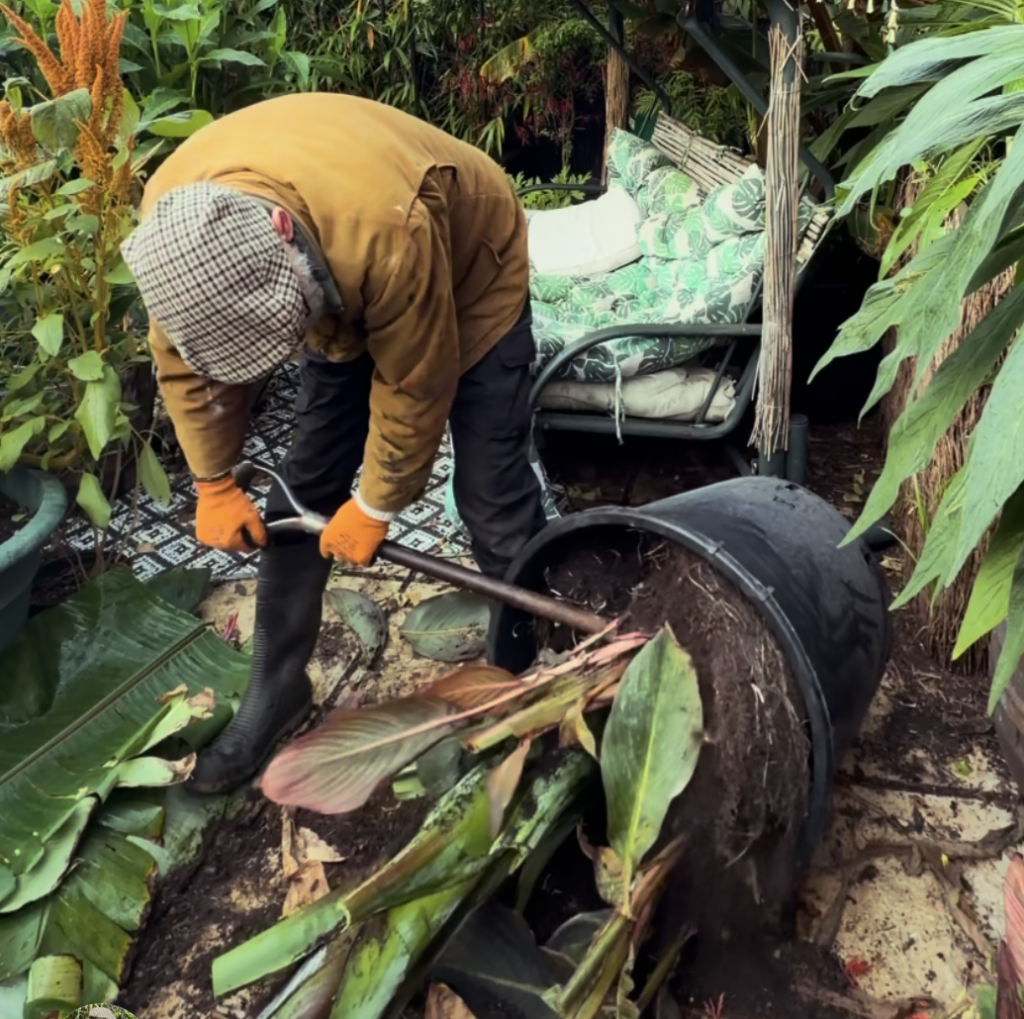
I’ll dig them out of their barrels and pots, remove them from their existing compost and repot them into fresh, dry compost.
I’ll also cut most of their leaves off, leaving just one or possibly two leaves on each plant. If the remaining leaves are particularly large, I’ll cut them in half to reduce their size.
The idea is to keep these plants ticking over through the winter rather than allowing them to go completely dormant.
They won’t be growing at their normal summer rate, of course, but by keeping them in the warmth of the greenhouse, with a much reduced amount of foliage and fresh, relatively dry compost, I’m hoping they’ll maintain some growth and come through the winter in good condition.
I quite like the idea of keeping these plants as living, growing specimens rather than storing everything away. It’ll be interesting to see whether this approach works better than dry storage.
Hedging my bets this winter
Essentially, I’m hedging my bets this year.
My two biggest Ensete ventricosum ‘Maurelii’ will be dry stored in the shed, with much more attention paid to the drying process.
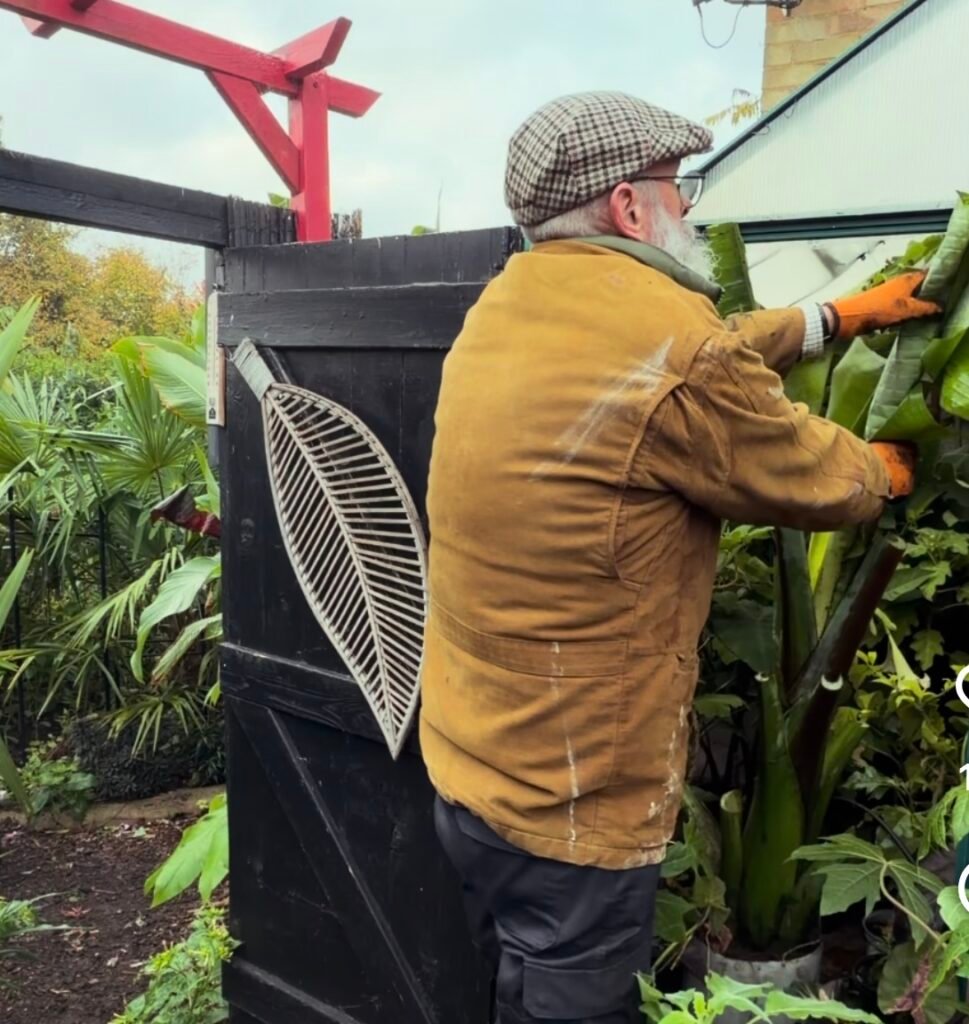
The other three Maurelii, along with my Ensete ventricosum ‘Hiniba’, will be kept in the warm greenhouse and treated more like large house plants.
It’ll be fascinating to see how they all fare.
There’s always a degree of experimentation involved in overwintering Ensete bananas, and sometimes you only really learn what works by trying different approaches. Last year’s losses have certainly made me think a little harder about how I prepare these plants for winter.
By spring, I’ll hopefully have a much better idea of which method has worked best. Ideally, all of them will have made it through, but even if one method proves more successful than the other, it’ll be useful information for future winters.
So that’s the plan this year: two large Maurelii going into dry storage, with the remaining Maurelii and my Hiniba staying in the warm greenhouse.
A slightly different approach, a bit of experimentation, and hopefully a much better success rate when spring comes around!