

There’s something lovely about creating pots for the winter months. Just because the days are shorter and the weather is colder, it doesn’t mean our gardens have to lose their colour, texture and interest. With a little thought and a mixture of evergreen foliage, silvery leaves, seasonal flowers and interesting shapes, winter containers can look just as beautiful as those we enjoy in spring and summer.
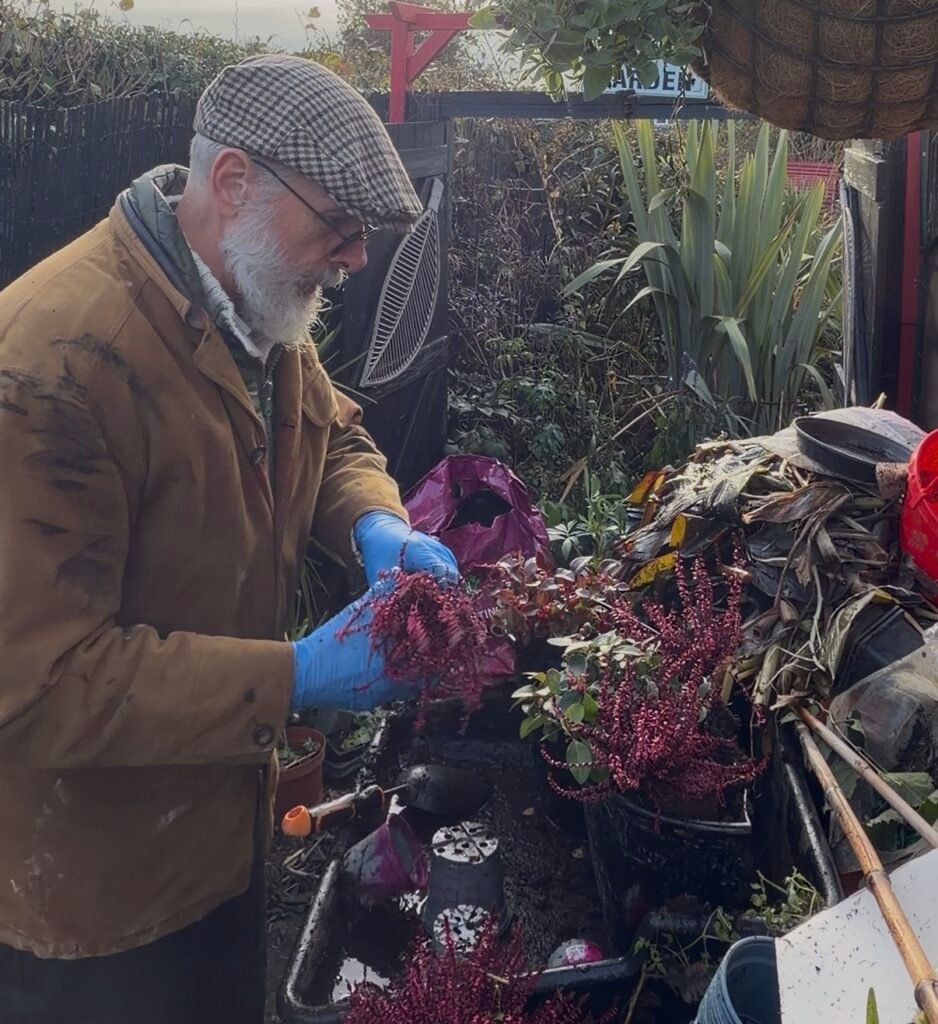
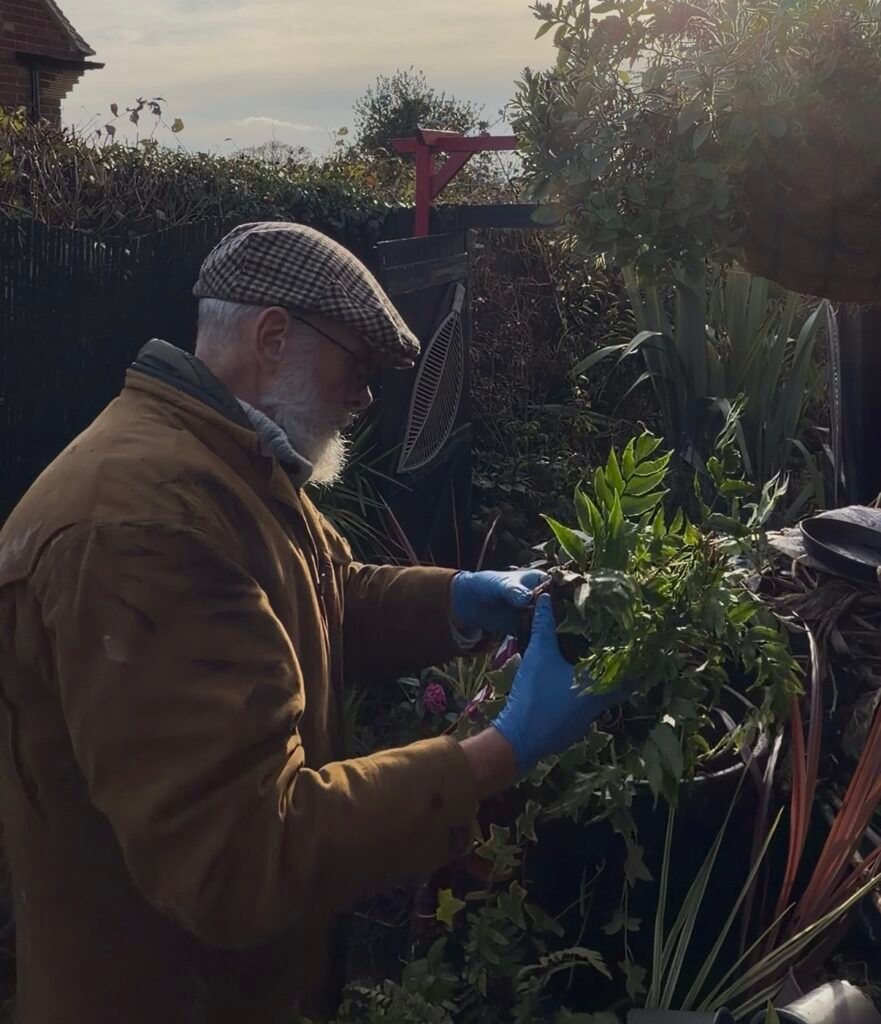
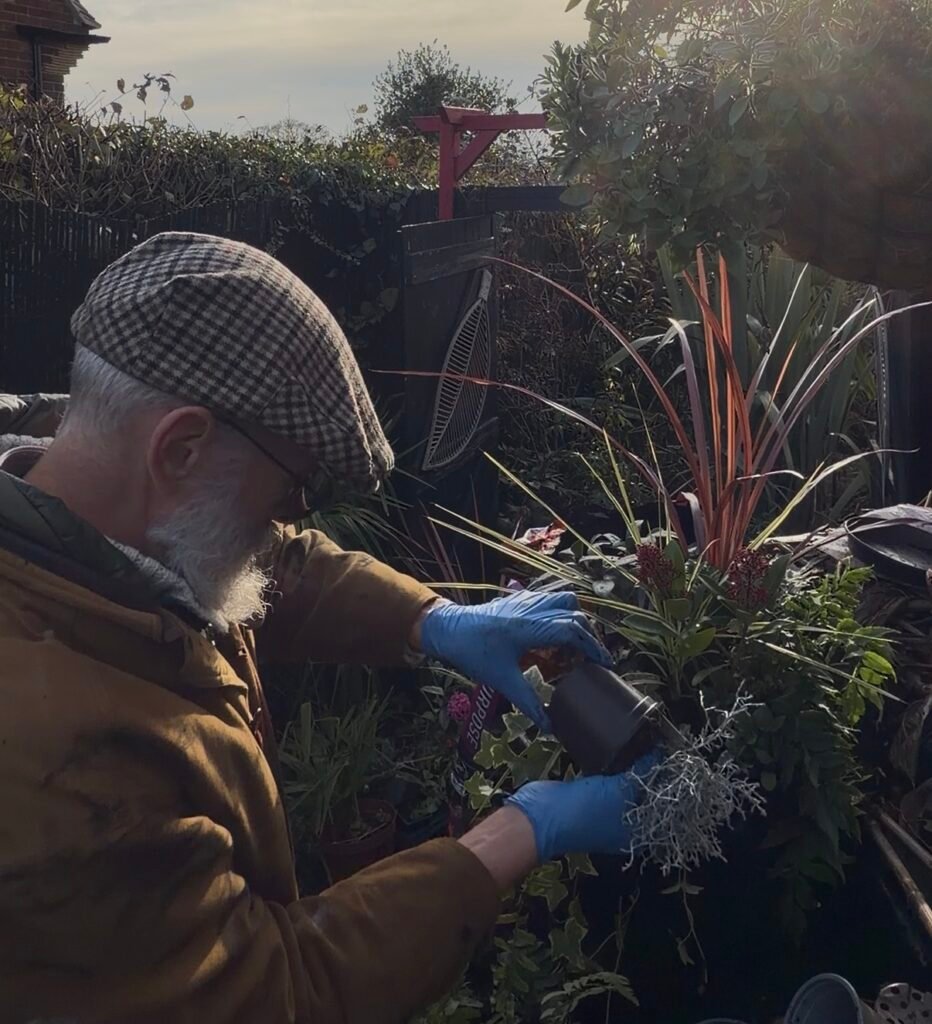
For my winter pots, I like to mix different plants together, choosing varieties that bring something special to the arrangement. I enjoy combining contrasting foliage, adding a little seasonal colour and using taller plants to give the pots height and structure.
Cordylines for height and drama
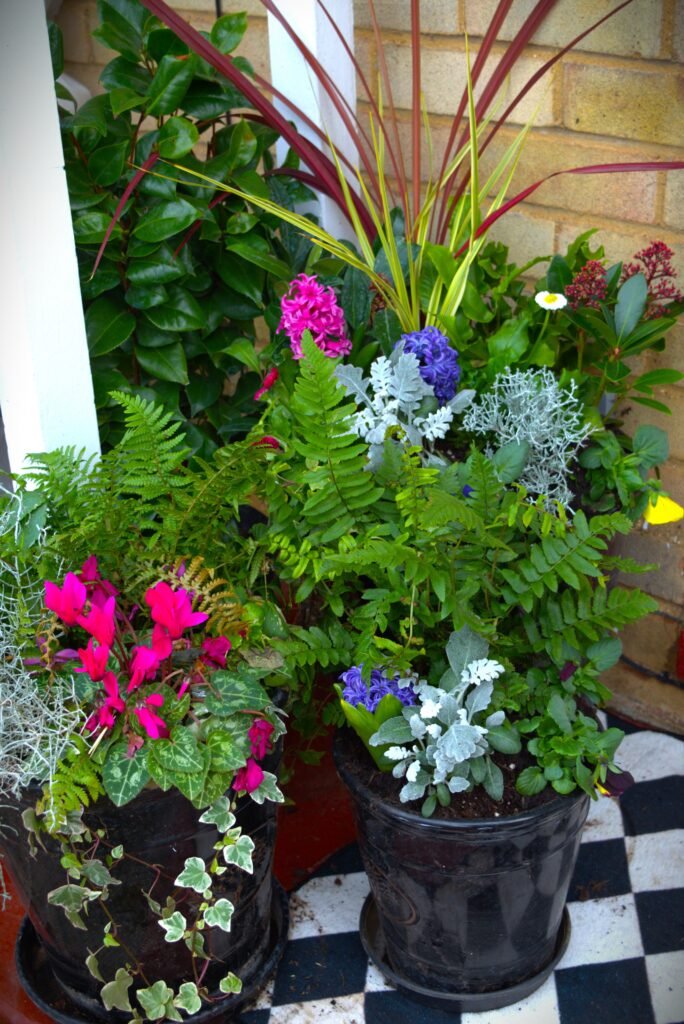
One of my favourite ways to create a focal point is with cordylines. I like to use two in each pot – one with red foliage and one variegated variety. Their upright, architectural leaves add height and drama, while the contrasting colours make a lovely statement.
They give the pots a contemporary feel and provide a strong structure around which I can build the rest of the planting. The other plants can then soften the arrangement and fill the spaces around them.
A mix of silver, green and winter colour
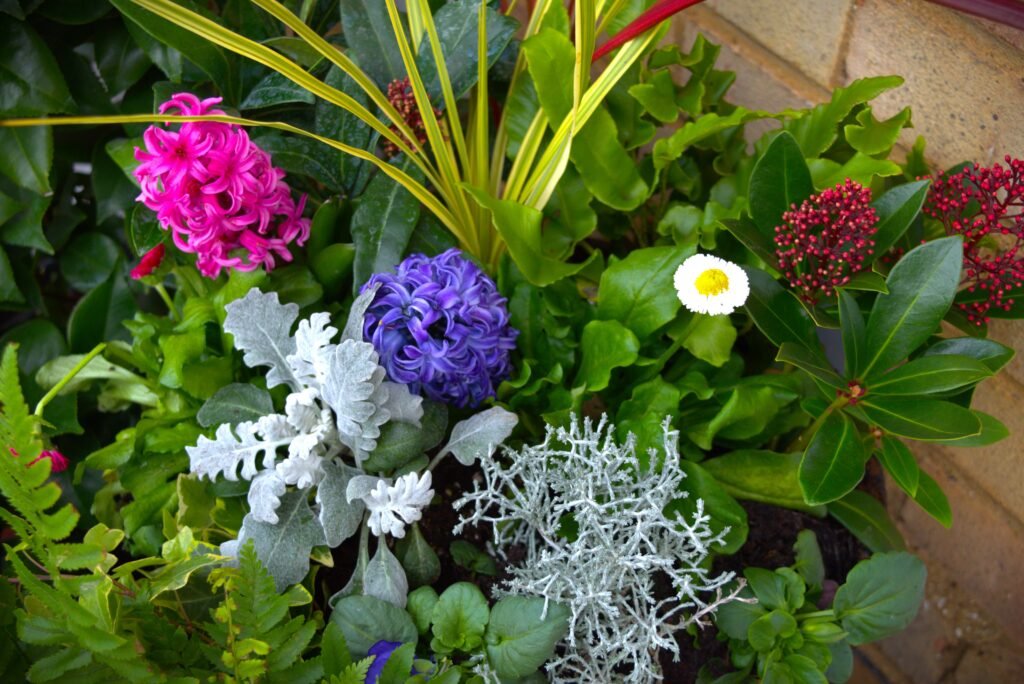
I love using silvery foliage in winter containers, as it catches the light beautifully on dull days. Calocephalus brownii, with its unusual wiry silver stems, is a real favourite. It adds wonderful texture and an almost sculptural quality to a pot.
Cineraria ‘Silver Dust’ is another lovely choice. Its soft, silvery, finely divided leaves contrast beautifully with darker green foliage and add a gentle brightness to the arrangement.
For a little flower colour, Bellis daisies are ideal. Their pretty little blooms bring a cheerful touch and sit beautifully among the foliage. Pansies are another favourite for adding colour through the colder months.
A little colour and fragrance with hyacinths
I also like to include hyacinths in my winter pots. They are such a lovely addition, bringing beautiful flower spikes, vibrant colour and that unmistakable sweet fragrance.
Planted among the foliage, they add another layer of interest and give the containers a real seasonal lift. I particularly enjoy watching them develop and come into flower as winter progresses. They are a lovely reminder that spring is just around the corner.
A special mention for Gaultheria ‘Big Berry’
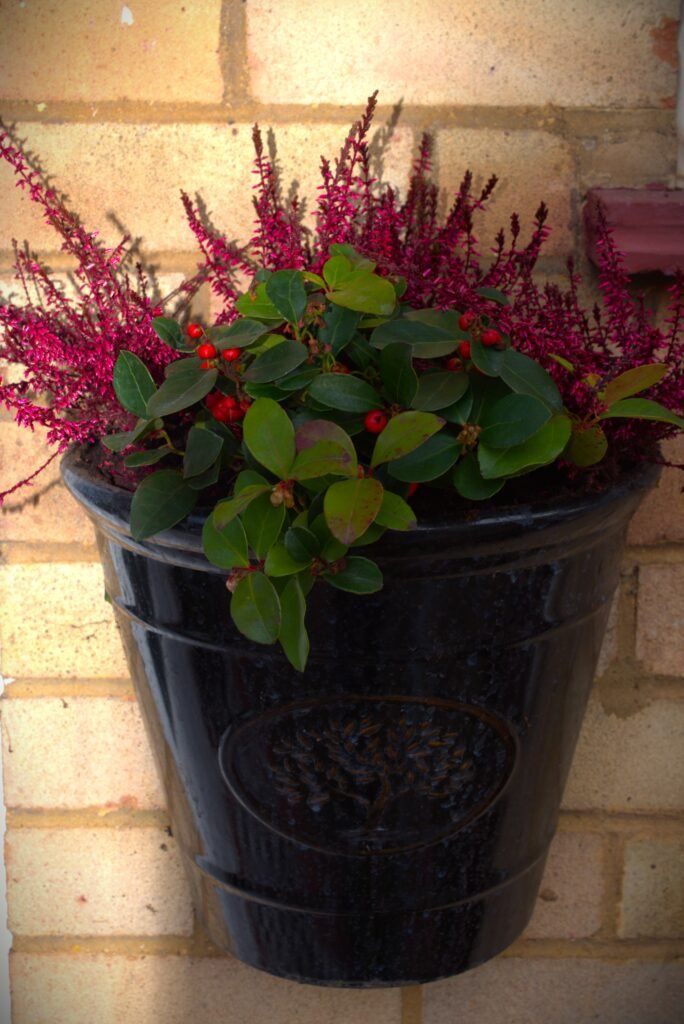
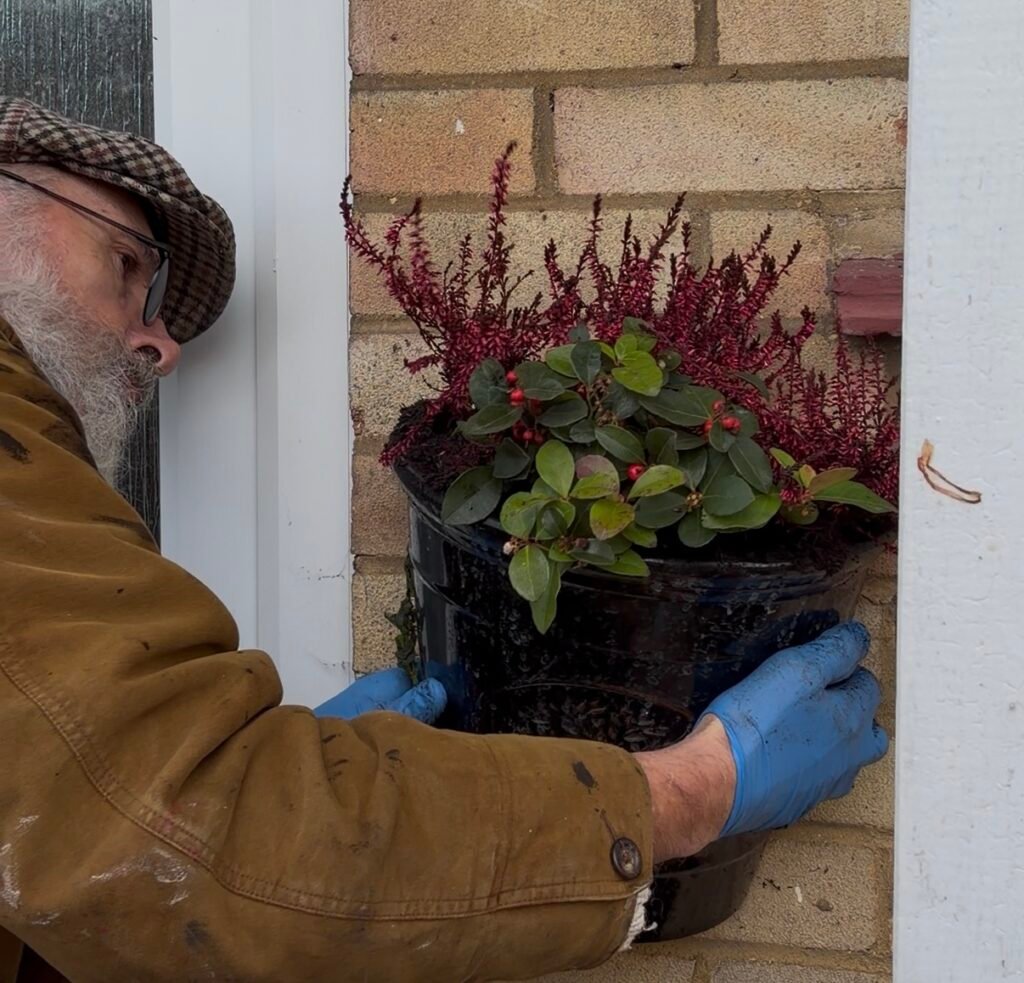
One plant I particularly wanted to include is Gaultheria ‘Big Berry’. I planted this in two of my wall planters alongside heathers, and I love the effect.
Its glossy evergreen leaves and bright red berries provide wonderful winter interest, while the heathers add extra texture and colour. Together they make a lovely display, especially when there is very little else flowering in the garden.
Adding greenery and structure
As well as flowers and silvery foliage, I like to include plants that provide lasting greenery and interesting shapes.
Asplenium scolopendrium, commonly known as Hart’s Tongue Fern, has beautiful glossy, strap-shaped leaves that add a fresh green contrast. Ivy is also useful, as its trailing stems soften the edges of containers and help bring the whole arrangement together.
Skimmias are another excellent choice for winter pots. Their evergreen foliage provides structure, and their attractive flower buds add interest during the colder months.
Different pots, different combinations
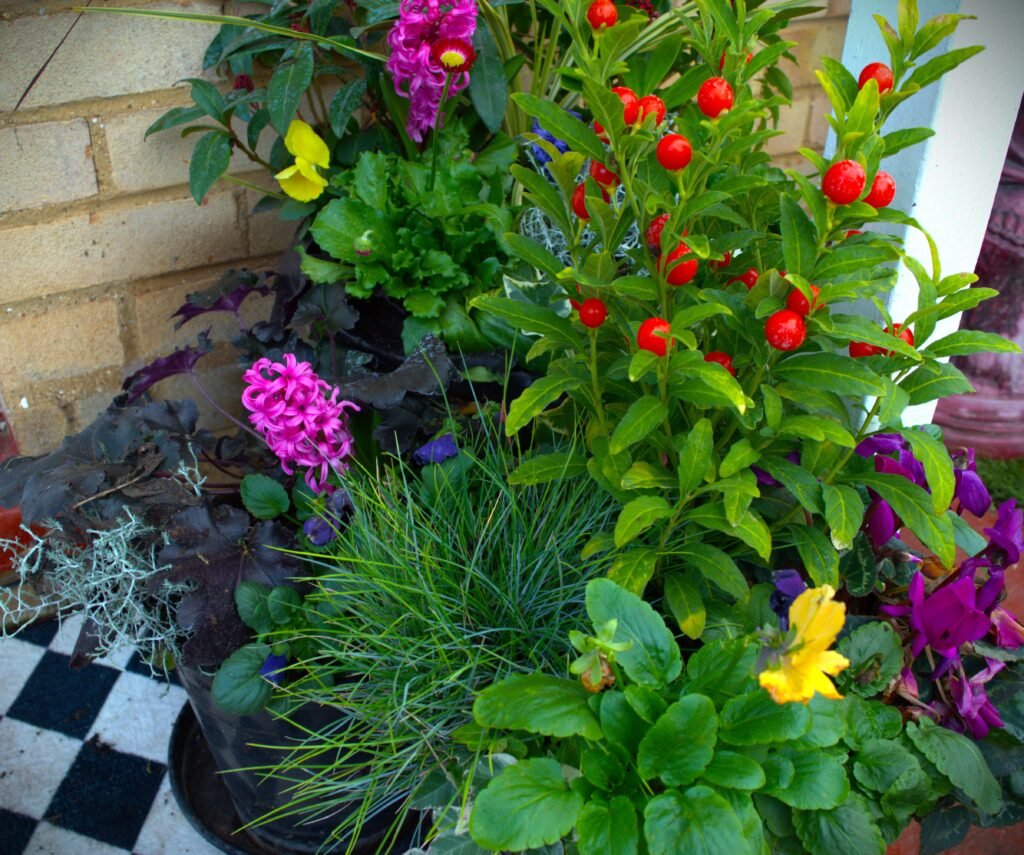
I don’t think every pot needs to look exactly the same. I enjoy experimenting with different combinations, using the plants that work best in each container and playing with colour, height and texture.
Some pots have the cordylines as their main feature, with silver foliage and trailing ivy around them. Others have more flowers, with pansies, Bellis daisies and hyacinths bringing seasonal colour and fragrance. My wall planters have their own character, with Gaultheria ‘Big Berry’ and heathers making a lovely combination.
The secret is to think about how the plants will look together, not just individually. Contrasting leaf shapes, different shades of green, silver and red, and a mixture of upright and trailing growth can make even a simple container feel full and interesting.
A little winter care
Winter pots still need a little attention. Good drainage is particularly important, as many plants dislike sitting in cold, wet compost. I also keep in mind that different plants have different requirements: Calocephalus prefers a sunny, well-drained position, while Hart’s Tongue Fern prefers more shade and moisture. Gaultheria and heathers need suitable acidic compost, so I keep their needs in mind when planting them together.
Hyacinths need good drainage too, and I avoid allowing their compost to become waterlogged. Cordylines can benefit from some protection in particularly harsh or frosty weather, depending on the variety.
A little deadheading and removing any tired leaves helps keep the pots looking fresh throughout the season.
Enjoying the garden through winter
I think winter containers are a wonderful way to keep a garden looking cared for and colourful when much of the garden is resting. By combining evergreen structure, unusual foliage, seasonal flowers and a few fragrant surprises, it is possible to create displays that change and develop throughout the colder months.
For me, the joy is in choosing the plants, putting together different combinations and then enjoying them every time I step outside. Even on the greyest winter day, a beautiful pot full of colour, texture and fragrance can bring a little bit of magic to the garden.