

So, I’ve gone and unwrapped my Musa basjoo a bit earlier than I normally would this year—and no, it’s not reckless! Sometimes in gardening, you have to read the weather, the soil, and the plant itself, and act accordingly. This year, all signs pointed to “unwrap now.”
A Hardy Banana with an Ancient Past
Musa basjoo, for those who don’t know, is originally from China, not the tropics you might imagine. It’s often called the “hardy banana,” and rightly so. This plant has been grown in temperate climates for centuries because it can survive cold winters that would kill most other bananas. Its secret weapon? The rhizome—the underground stem—which is tough as old boots. Even if the leaves die back completely in frost, the rhizome is ready to bounce back in spring with a lush, tropical-looking display that makes any garden feel like a warm escape.
Why I Decided to Unwrap Early
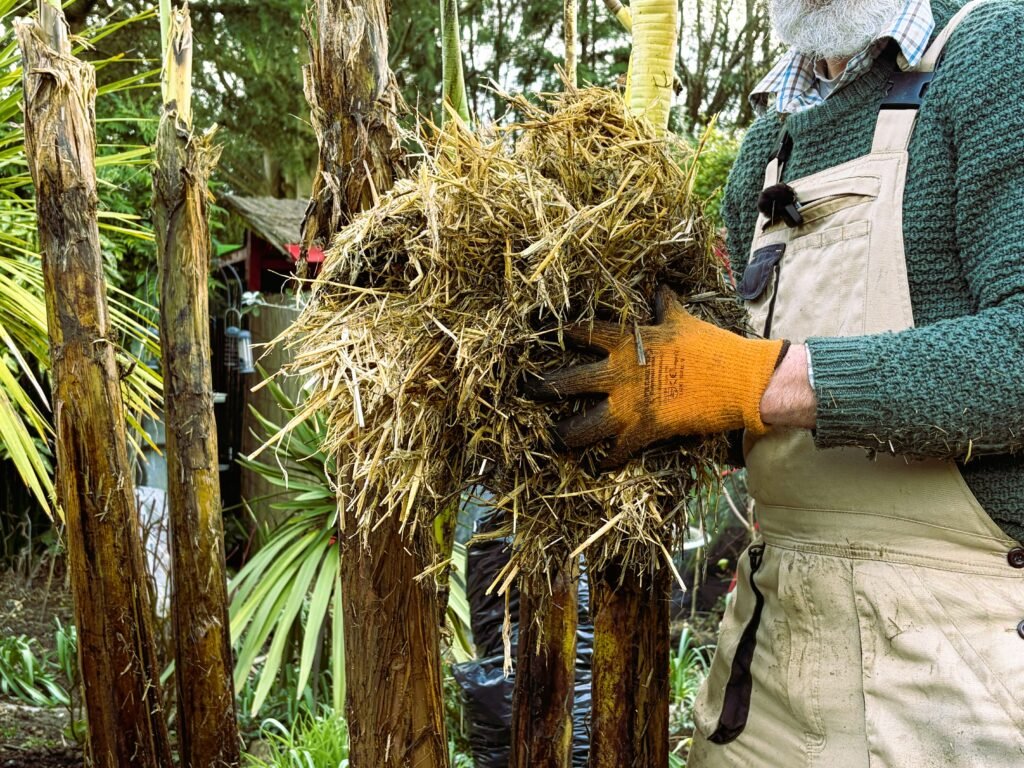
Here’s the thing: it’s been wet, wet, wet, and my Musa basjoo has been wrapped up for months to save the pseudostems which can be damaged by hard frosts. Normally, that’s fine, but when moisture gets trapped under insulation for too long, the risk of rot skyrockets. And let’s be honest—that’s the last thing any gardener wants. The leaves might look sad, but rot goes straight for the rhizome, and once that’s gone, there’s no coming back.
Luckily, the forecast is in my favour—mild, wet weather with no frost for at least two weeks. That gives my banana a breathing window. By unwrapping now, I’m letting air circulate, giving the soil a chance to dry slightly, and reducing the chance of any nasty fungal issues.
Watching for New Growth
Another bonus of early unwrapping is being able to spot new shoots early. Musa basjoo can start growing even in mild conditions, and catching those tiny green tips means I can protect them if the weather suddenly takes a turn. Plus, it’s just exciting to see life stirring from what looked like a winter-dormant plant!
Care Tips for Your Hardy Banana
If you’re thinking about doing the same, here’s what I’d suggest:
- Keep an eye on moisture – Too soggy, and the rhizome will struggle.
- Mulch gently – A light layer of straw or leaves protects the roots without trapping too much water.
- Check for shoots – Early detection helps you guide and protect growth.
- Don’t panic about leaves – Even if they’re brown and bedraggled, the rhizome is what matters.
Why Musa basjoo Is a Gem
I love Musa basjoo because it’s forgiving, resilient, and dramatic. It brings a tropical vibe without demanding a greenhouse, and it has history—Chinese gardeners and then European gardeners have relied on its hardiness for centuries. It’s a plant you can experiment with, tweak your care, and still come out with lush results. That’s why trusting your judgement—rather than sticking rigidly to a calendar—is so important.
So yes, I’ve unwrapped my Musa basjoo early this year. Wet soil, mild weather, and a watchful eye made it the right call. It’s breathing, happy, and ready for spring growth. And honestly? I can’t wait to see it unfurl its first shoots—there’s something magical about a hardy banana waking up after winter.