

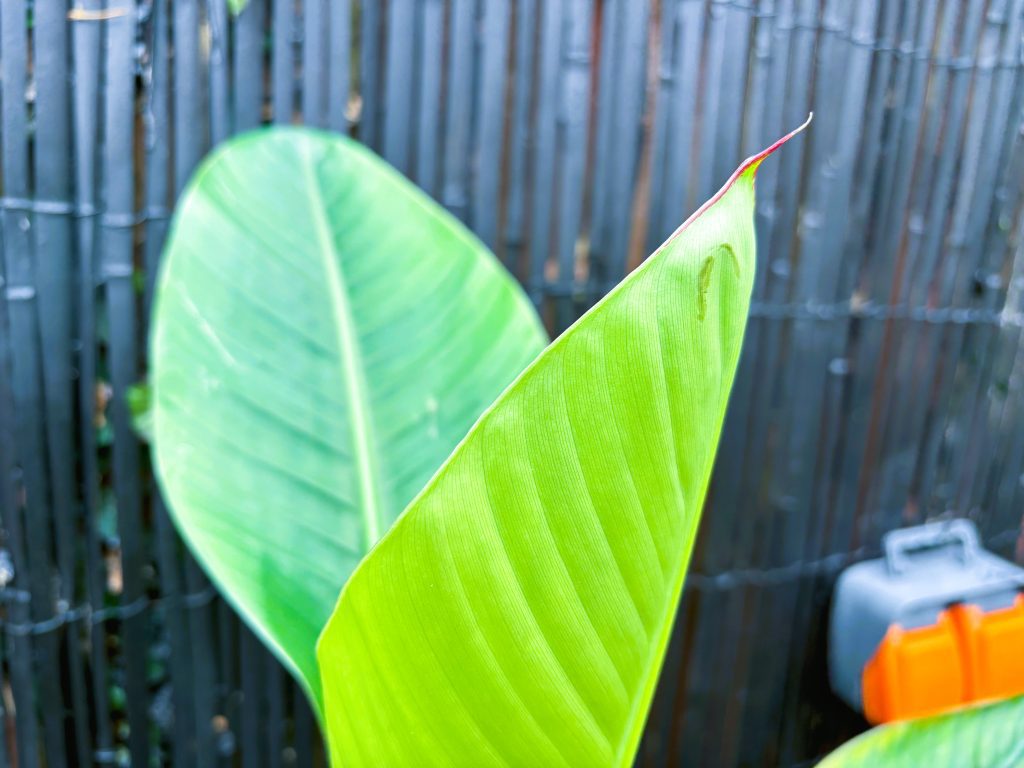
Ensete ventricosum ‘Hiniba’ is a rare and striking cultivar of the Abyssinian banana. It is distinguished by its deep blue-green, waxy leaves and rapid growth, making it a dramatic feature plant. Unlike true bananas (Musa species), Ensete do not produce offsets, so propagation is by seed, adding to their rarity.
RHS Hardiness Rating: H2 (tender – cannot tolerate frost).
Growing Conditions
1. Climate & Hardiness
- Ideal for USDA zones 9-11; in the UK, best grown as a seasonal plant or overwintered indoors.
- Not frost-hardy—must be brought indoors or stored dry during winter.
- Summer Growth Temperature: Prefers 18-30°C (64-86°F).
- Can tolerate short periods of cooler weather, but growth slows significantly below 10°C (50°F).
2. Soil & Planting
- Prefers rich, well-draining soil with high organic matter.
- Suitable for neutral to slightly acidic loam or sandy loam.
- Avoid heavy clay soils unless well-amended with compost and grit.
- Does not tolerate waterlogged soil—ensure good drainage.
3. Position
- Full sun for best growth, but benefits from some afternoon shade in extreme heat.
- Sheltered position—protect from strong winds to prevent leaf shredding.
- Ideal for containers in colder climates to allow for easy overwintering.
Feeding & Watering
1. Watering
- High water demand during summer—keep soil evenly moist but not soggy.
- Reduce watering in autumn and winter.
- If overwintering dry, stop watering completely once dormant.
2. Feeding
- Spring to late summer: Feed weekly with a high-nitrogen fertilizer (e.g., liquid seaweed, chicken manure pellets, or a balanced NPK feed like 10-10-10).
- Late summer to autumn: Reduce nitrogen and switch to a potash-rich feed (like tomato feed) to strengthen the pseudostem before winter.
Winter Care & Storage
1. Container-Grown Plants
- Move to a frost-free greenhouse or indoor space before first frost.
- Keep soil just moist—reduce watering significantly.
2. In-Ground Plants (Overwintering Storage)
- If too large to move, dig up the plant before frost and allow roots to dry.
- Store upright in a cool, dry place (e.g., garage or shed) at 5-10°C (41-50°F).
- Remove all leaves except a short pseudostem stump (about 30cm/12in tall).
- No watering required—replant in spring when temperatures rise.
Propagation
- Grown from seed only—seeds require scarification and warm temperatures (25-30°C) to germinate, which can take weeks to months.
Ensete ventricosum ‘Hiniba’ cannot be propagated by cutting in half. Unlike Musa (true bananas), which produce offsets (pups), Ensete species grow from a single central growing point (monocarpic meristem) and do not naturally form side shoots.
Propagation Options for Ensete ventricosum ‘Hiniba’
- Seed Propagation (Primary method)
- Seeds need scarification (light sanding or nicking) and warm temperatures (25-30°C) for germination.
- Germination can take weeks to months.
- Tissue Culture (Commercial method)
- Some rare cultivars are propagated in labs via micropropagation.
Can You Cut and Regrow an Ensete Plant?
- If you cut an Ensete in half, it will not regrow like some clumping bananas (Musa).
- However, experimental techniques involving slicing the base into sections and applying hormones have been tested by expert growers, but this is unreliable and not commonly used.
For home gardeners, seeds are the only viable propagation method for Hiniba.
Pests & Problems
- Aphids & spider mites may appear, particularly in greenhouses.
- Leaf scorch occurs if humidity is too low.
- Root rot is a risk in wet, cold soil.
Summary
Ensete ventricosum ‘Hiniba’ is a rare and spectacular ornamental banana requiring warmth, rich soil, and regular feeding to thrive. It must be overwintered indoors or stored dry in cold climates. Its striking foliage and rapid growth make it a perfect feature plant for a tropical-style garden.
Ensete ventricosum ‘Hiniba’ – Grow Guide
Common name: Red Abyssinian Banana, Banana ‘Hiniba’
Family: Musaceae
Type: Tender perennial / tropical banana
Hardiness: RHS H1–H2 – frost-tender; overwinter indoors or in heated glasshouses in the UK
Ultimate size: 2–3 m tall × 1.5–2 m wide (in UK conditions)
Overview
Ensete ventricosum ‘Hiniba’ is a compact, ornamental banana prized for its sturdy upright stems and large, dramatic red-tinged leaves. Unlike edible bananas, it is grown primarily for foliage impact in tropical-style borders, large containers, or conservatories. Its red-toned leaves add striking colour contrast in the garden and make it ideal for bold tropical planting schemes.
Position
- Light: Full sun to partial shade
- Protect from cold winds and frost
- Ideal in sheltered borders, patios, or large pots
Soil
- Type: Moist, fertile, well-draining soil
- Enrich soil with compost or well-rotted manure
- pH: Neutral to slightly acidic
Planting
- When: Spring, after all risk of frost
- Plant crowns at soil level, ensuring roots are well-covered and supported
- Space 1.5–2 m apart if planting multiple specimens
- For container planting, use large pots with drainage holes
Watering
- Keep soil consistently moist during active growth
- Do not allow the soil to dry out
- Reduce watering in winter when plant is semi-dormant indoors
Feeding
- Apply a high-potassium liquid fertiliser every 2–3 weeks during the growing season
- Optional slow-release fertiliser at planting
Growth & Habit
- Upright clump-forming banana
- Red-tinged leaves on stout stems
- Leaves can reach up to 1–1.5 m long in UK conditions
- Foliage dies back in winter in frost-prone areas; regrows in spring if protected
Flowering
- Rarely flowers in UK gardens; main interest is foliage colour and form
Maintenance
- Remove damaged or yellowing leaves to maintain tidy appearance
- Mulch around the base in winter for extra protection
- In frost-prone areas, lift and overwinter in large pots or cover with horticultural fleece
- Cut back dead stems to encourage fresh growth in spring
Propagation
- Offsets (pups): Rare; remove and pot separately
- Seed: Slow and difficult; mostly used by specialists
Pests & Problems
- Generally pest-free
- Slugs may damage young leaves
- Root rot if soil is waterlogged or pots have poor drainage
- Sensitive to frost; leaf damage can occur below 5 °C
Garden & Indoor Use
- Bold architectural feature for tropical-style gardens
- Large containers on patios, terraces, or conservatories
- Excellent companion plants:
- Colocasia and Alocasia
- Canna
- Musa basjoo (hardy banana)
- Cannas and Cannas-like tropical perennials
Quick Reference Table
| Feature | Details |
|---|---|
| Hardiness | RHS H1–H2 – frost-tender; overwinter indoors |
| Height | 2–3 m (UK) |
| Spread | 1.5–2 m |
| Flowering | Rare in UK; main interest is foliage |
| Position | Full sun to partial shade; sheltered |
| Soil | Moist, fertile, well-draining; neutral to slightly acidic |
| Water | Keep soil consistently moist; reduce in winter |
| Feeding | High-potassium liquid feed every 2–3 weeks; optional slow-release at planting |
| Propagation | Offsets (rare); seed (slow) |
| Maintenance | Remove damaged leaves; mulch in winter; protect from frost |
| Best feature | Striking red-tinged leaves and tropical architectural habit |