

There is something particularly special about a garden that continues to flower as the days shorten and the first hints of autumn begin to appear. Just when many summer flowers are fading, a wonderful cast of late-season performers steps into the spotlight, bringing colour, movement and life to the garden at a time when we need it most.
From the fiery orange blooms of Tithonia to the sculptural flowers of Leonotis nepetifolia, the bold colours of cannas and dahlias, the cheerful yellow flowers of Smallanthus, and the reliable colour of impatiens and begonias, these late flowerers deserve far more appreciation than they sometimes receive.
They are not simply filling gaps in the garden. They are extending the flowering season, providing valuable resources for wildlife and reminding us that a garden can remain vibrant right up until the first frosts.
A late-season feast of colour
One of the great pleasures of late-flowering plants is their ability to bring a garden back to life just as summer begins to loosen its grip.
Tithonia — the fiery Mexican sunflower

Tithonia, commonly known as Mexican sunflower, is a real showstopper. Its vivid orange or red-orange flowers glow in the autumn sunshine, rising above the surrounding planting on tall, branching stems.
It has a wonderfully informal character, bringing a touch of the exotic to the garden while attracting butterflies, bees and other insects. On a sunny day, its flowers can be alive with activity, making it as valuable for wildlife watching as it is for colour.
Tithonia is a particularly welcome addition to the late-season garden because it produces abundant flowers over a long period when many other plants are beginning to fade.
Leonotis nepetifolia — lion’s ear
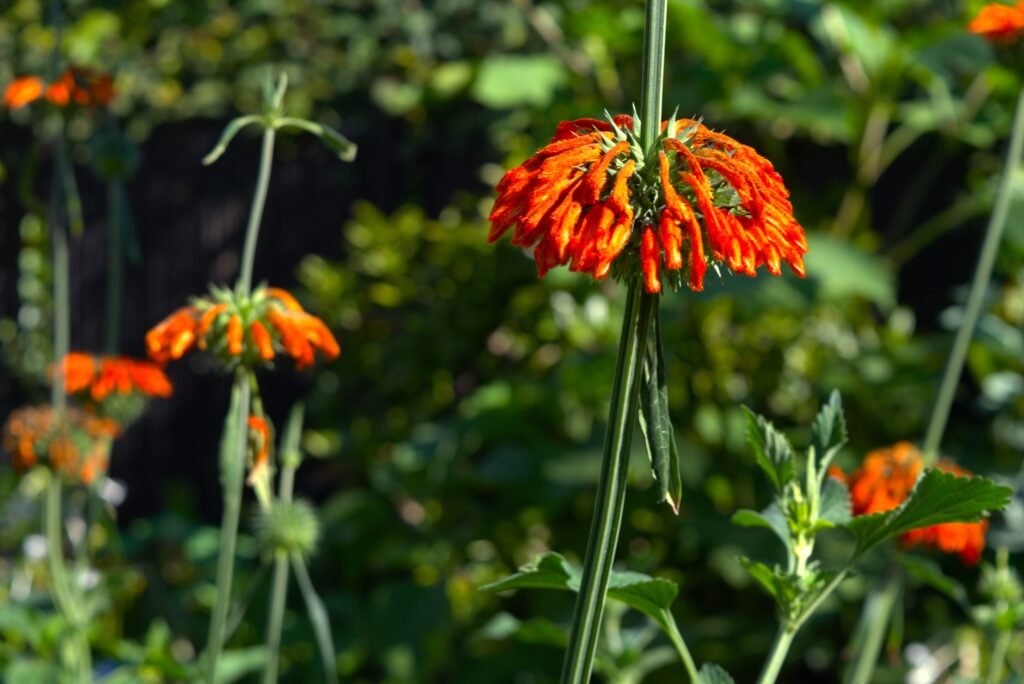
With its unusual whorls of orange flowers arranged around tall, upright stems, Leonotis nepetifolia brings both drama and architectural interest to the garden.
Sometimes called lion’s ear, this striking plant has a distinctive appearance that makes it stand out among softer planting. Its tubular flowers can attract long-tongued pollinators, including bumblebees, and provide a valuable source of nectar where growing conditions allow.
In a British garden, it offers something a little different: height, colour and an exotic feel that helps carry the display well into the later part of the growing season.
Cannas — tropical foliage and bold flowers
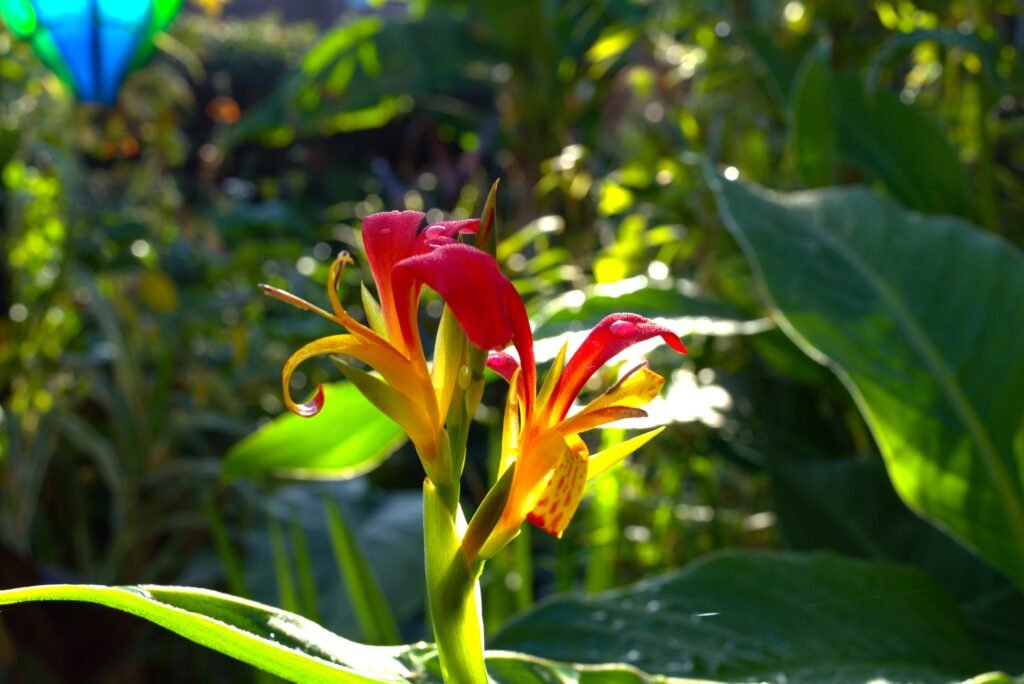
Cannas bring a wonderful tropical exuberance to late summer and autumn. Their large, paddle-shaped leaves provide structure and texture, while their bold flowers, in shades of red, orange, yellow and pink, create striking blocks of colour.
Although cannas are not among the most important nectar sources for British pollinators, they contribute to the overall diversity and structure of the garden. Their impressive foliage provides shelter and visual interest, and their flowers may be visited by insects where accessible floral resources are available.
Cannas remind us that a wildlife-friendly garden is not just about nectar-rich flowers. A mixture of plant forms, heights and foliage creates a more varied environment for the creatures that share our gardens.
Dahlias — stars of the autumn border
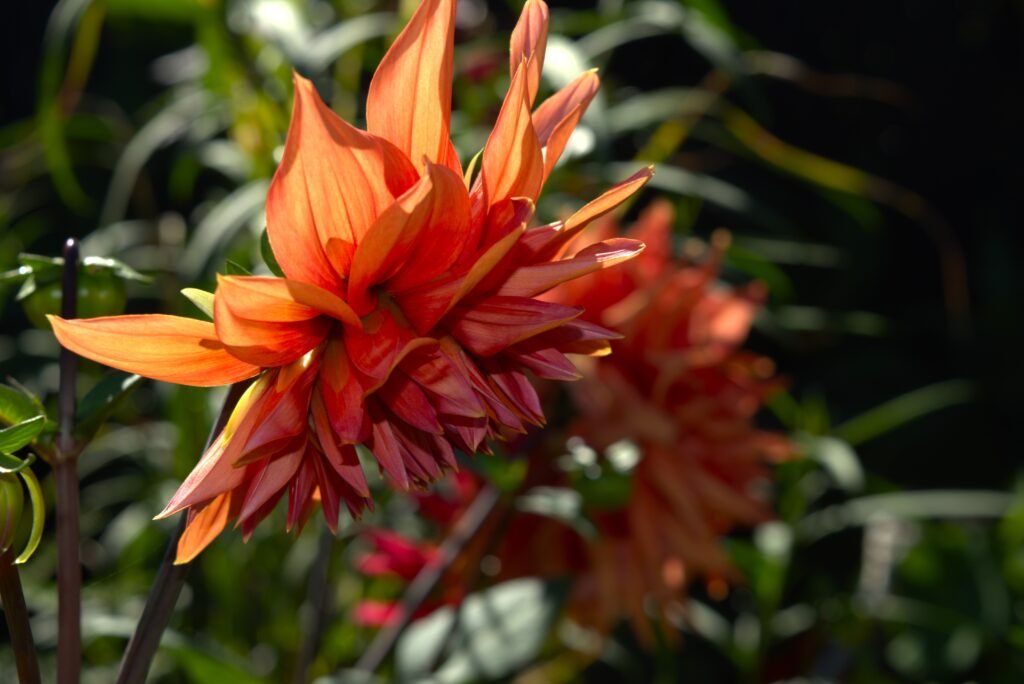
Dahlias are among the undisputed stars of the late-season garden. From simple, open-centred flowers to elaborate decorative blooms, there is a dahlia for almost every planting scheme.
For wildlife, however, the choice of variety matters. Single-flowered and open-centred dahlias generally provide easier access to pollen and nectar for bees and hoverflies, whereas many densely double varieties offer far less.
By choosing a mixture of flower forms, we can enjoy spectacular colour while ensuring that at least some of our dahlias are genuinely useful to visiting insects.
Their ability to continue flowering over many weeks makes them especially valuable when other summer favourites have finished.
Smallanthus — a little-known late-season performer
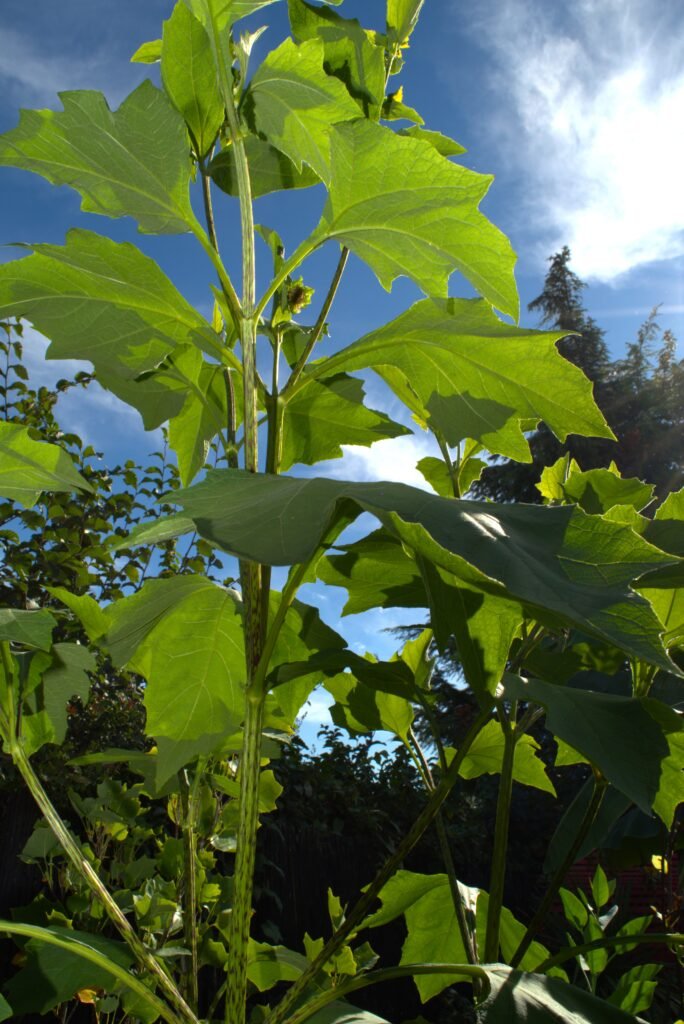
Smallanthus, particularly Smallanthus sonchifolius, commonly known as yacon, brings another dimension to the late-season garden.
Its small, yellow, daisy-like flowers can provide a cheerful splash of colour when the garden is beginning to look tired. As a member of the daisy family, its open flower heads may attract insects seeking pollen and nectar.
In cooler British conditions, flowering can be late or limited, so a warm, sunny and sheltered position is helpful.
Although it is perhaps less familiar than dahlias or cannas, Smallanthus is an interesting plant to explore for those who enjoy growing something a little different.
Brugmansia — dramatic evening flowers
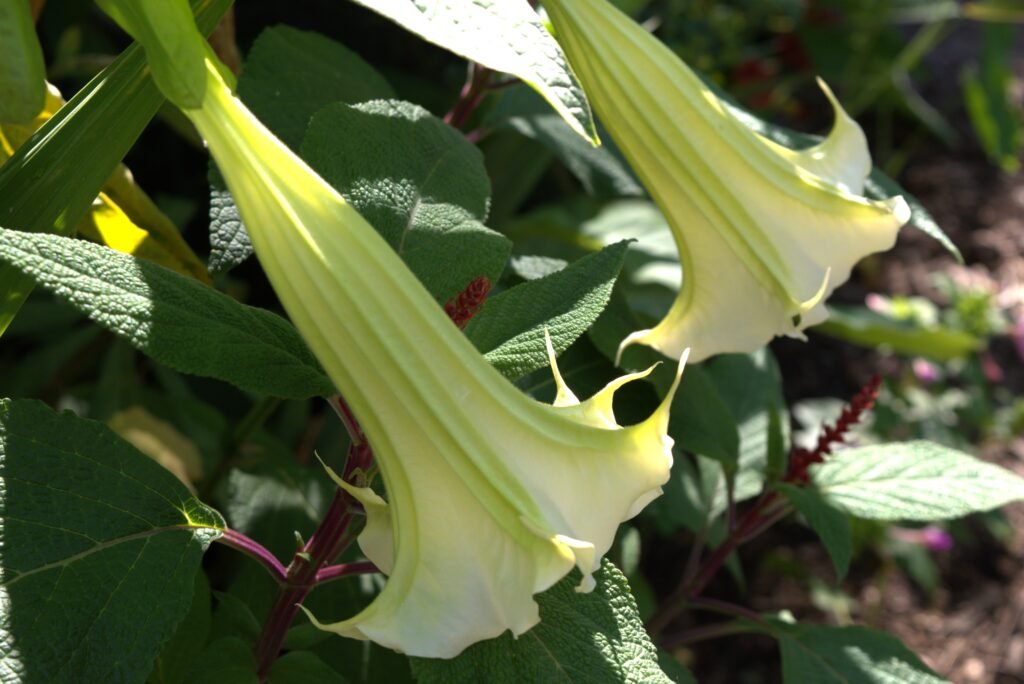
Brugmansia, commonly known as angel’s trumpet, brings a wonderful sense of drama to the late-season garden. Its enormous, pendulous, trumpet-shaped flowers, often beautifully scented in the evening, make it a striking feature on a sheltered patio or in a large container. Flowering can continue into autumn in favourable conditions, adding an exotic touch just when many other plants are beginning to fade.
Its wildlife value is particularly interesting. The strong evening fragrance and large, tubular flowers are adaptations associated with pollination by moths and, in its native range, other specialised pollinators. In Britain, the wildlife benefits may be more limited because many Brugmansia species originate from South America and their flowers are adapted to pollinators that may not be present here. Nevertheless, its late flowers add diversity and interest to the garden, and observing which insects visit them can be fascinating.
Brugmansia is a reminder that not every beautiful plant will be equally valuable to our native wildlife, but understanding its ecology helps us make better planting choices. For a garden that truly supports pollinators, combine it with reliable nectar sources such as tithonia, single-flowered dahlias and other late-flowering plants.
An important note: All parts of Brugmansia are highly poisonous if ingested, so take care around children and pets and wear gloves when pruning or handling the plant.
Impatiens and begonias — dependable colour until the frost
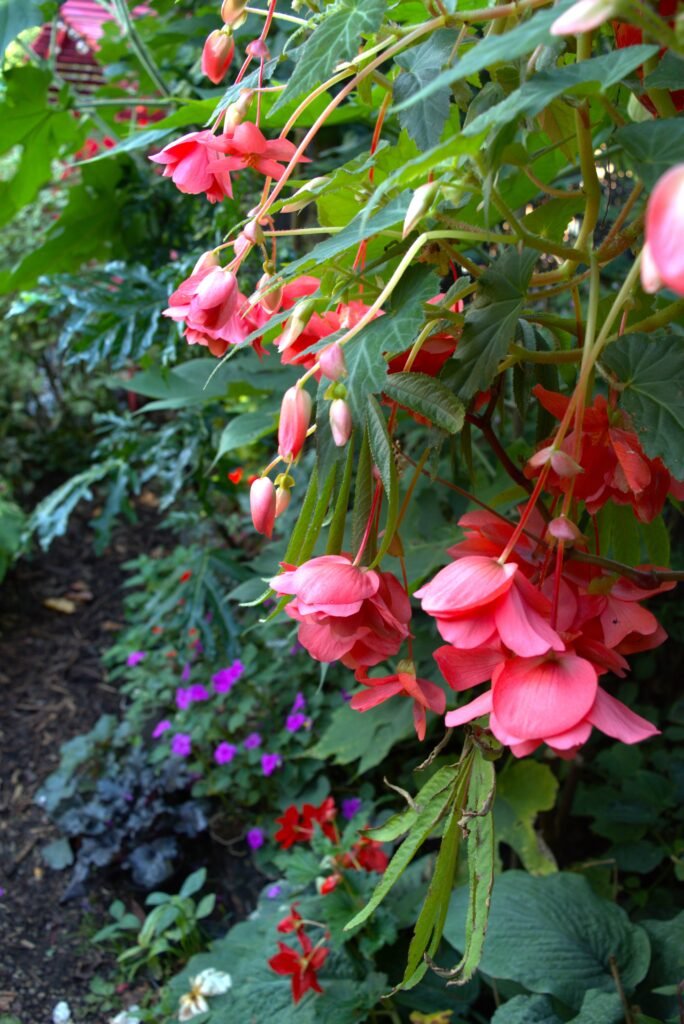
We should not overlook the contribution of impatiens and begonias. Often associated with summer bedding, containers and shady corners, these dependable plants can continue flowering well into autumn if temperatures remain mild.
Impatiens bring generous splashes of colour to areas where many sun-loving plants struggle, while begonias offer a long-lasting display of flowers and, in some varieties, beautiful foliage.
Their wildlife value varies according to the species and flower form, and they are generally less valuable to pollinators than open, nectar-rich flowers such as single dahlias. Nevertheless, they have an important place in the ornamental garden, helping to maintain colour and interest across a variety of growing conditions.
Why late flowers matter to wildlife
Late-flowering plants are about much more than extending the display. They can play an important role in supporting wildlife during a changing and often challenging period of the year.
As autumn approaches, the availability of flowers becomes less predictable. Some plants have finished flowering, while others produce fewer blooms. Yet many insects remain active, taking advantage of mild, sunny days to gather the resources they need.
Bees, hoverflies and butterflies may still be searching for nectar and pollen. Queen bumblebees of some species need to build up energy reserves before hibernation, while other pollinators are still active or completing their life cycles.
A garden with a generous supply of late flowers can make a real difference.
Tithonia and open-centred dahlias can provide accessible food when it is particularly welcome. Other flowering plants may also contribute, depending on their floral structure, nectar production and the insects present in the garden.
Even a small group of flowering plants can become a busy feeding station, especially when few other flowers are available nearby.
It is worth remembering, too, that wildlife gardening is about more than nectar. Stems, leaves, seed heads and sheltered spaces can all contribute to a healthy garden ecosystem. Leaving some plants standing after flowering, rather than cutting everything back immediately, creates opportunities for insects to shelter and birds to forage among the remaining vegetation.
A garden with layers, not just flowers
One of the most effective ways to support wildlife is to think about the garden as a whole rather than concentrating on individual plants.
Tall tithonias and Leonotis nepetifolia can add height and movement. Cannas contribute bold foliage and structure. Dahlias provide abundant flowers at different heights, while impatiens and begonias bring colour to lower-growing and shadier areas.
Together, they create a richer planting environment, with different forms, textures and microclimates. Dense foliage can offer shelter, while a mixture of sunny and shaded spaces provides different creatures with places to feed and rest.
Not every plant needs to be a major nectar source to earn its place in a wildlife-friendly garden. The most valuable gardens combine plants that provide direct food for insects with plants that offer shelter, structure and seasonal continuity.
Where wildlife is the main priority, it is worth choosing carefully. Open, single flowers are generally more useful to pollinators than heavily double blooms. Native plants and other pollinator-friendly species can also be important components of the garden, particularly when grown alongside long-flowering ornamental plants.
Making the most of the final flowering season
Late-flowering plants often need a little encouragement to perform at their best.
Deadheading dahlias and other repeat-flowering plants can encourage further blooms, while regular watering during dry spells helps plants maintain their display. A sunny, sheltered position will help warmth-loving plants such as tithonia and Leonotis nepetifolia flower more successfully in the British climate.
It is also important to recognise the limits of the season. Frost can bring a sudden end to tender plants, so enjoy their flowers while they last. Where appropriate, cannas and dahlias can be lifted and stored over winter, while suitable begonias can be overwintered in frost-free conditions.
As flowering comes to an end, resist the urge to clear every border completely. Leave some healthy stems and seed heads standing, and allow parts of the garden to become a little untidy. A few carefully chosen areas of natural shelter can be every bit as valuable as the flowers themselves.
Learning to love the autumn garden
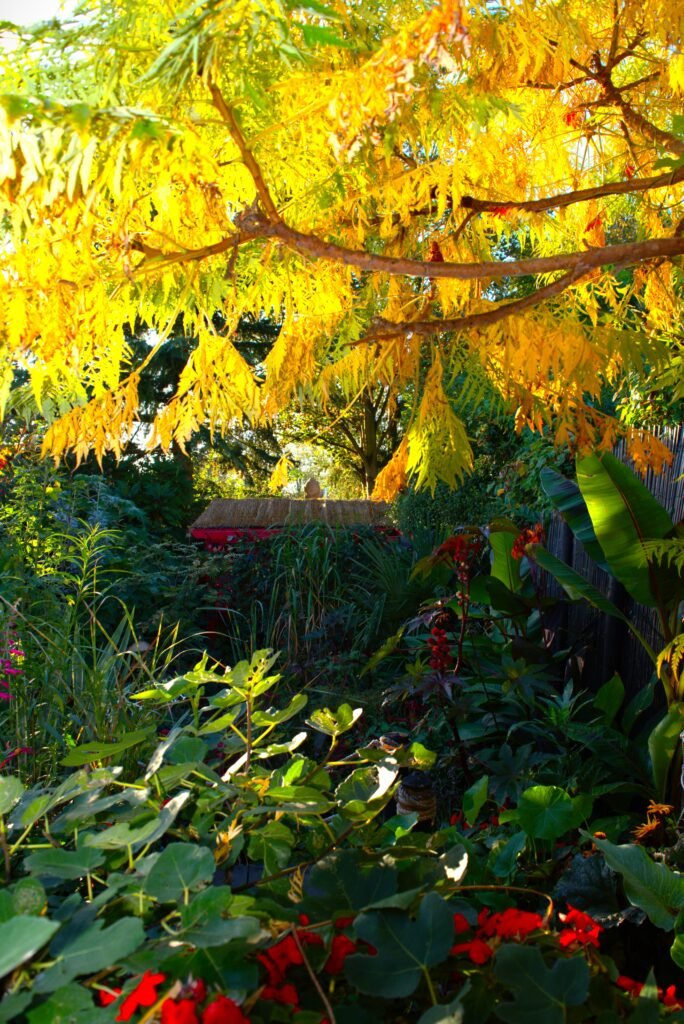
There is a temptation to think of autumn as the beginning of the end for the garden. The days grow shorter, temperatures fall and the abundance of midsummer gradually fades. But late-flowering plants challenge that idea.
They remind us that the gardening year is not divided neatly into a season of growth followed by a season of decline. Instead, it is a continuous sequence of changes, each with its own beauty and opportunities.
The vivid orange of tithonia, the curious flower whorls of Leonotis nepetifolia, the bold leaves of cannas, the generous blooms of dahlias, the cheerful flowers of Smallanthus, and the reliable colour of impatiens and begonias all help carry the garden through the changing seasons.
Most importantly, these plants encourage us to look more closely. Watch a bee move from flower to flower on a mild autumn afternoon. Notice a hoverfly resting on a dahlia. Look for the last butterflies taking advantage of a sunny border. These small moments reveal just how much life can remain in the garden long after summer has passed.
A garden that flowers late is not simply a garden that lasts longer. It is a garden that offers continuity, interest and opportunities for wildlife when they are especially welcome.
So let us celebrate the late flowerers. Let us plant for colour, certainly, but also for insects, shelter, diversity and the simple pleasure of watching a garden remain alive.
Because the garden’s story does not end when summer does. Sometimes, some of its most rewarding chapters are still to come.